
Electrophysiology
Stable, drift-free micromanipulation for patch-clamp and intracellular recording, at the bench, in vivo, and in plant cells.
A patch-clamp or sharp-electrode recording lives or dies on stability: the pipette has to reach the cell with micrometre precision and then stay put, drift-free and vibration-free, for minutes to hours. Conventional manipulators struggle to hold that line.
Kleindiek’s Nanomotor® manipulators were built for it: high resonance frequency, drift around 1 nm/min, sub-nanometre steps, and compact enough to sit right by the preparation. The same family scales from the benchtop MM3A-LS to a single-axis motor light enough to ride on an animal’s head. The articles below work through patch-clamp positioning, recording in freely moving animals, and impaling walled plant cells.
Articles & videos
Short, focused reads and in-microscope footage — start with the introduction or jump to a technique.
Technical deep-dives
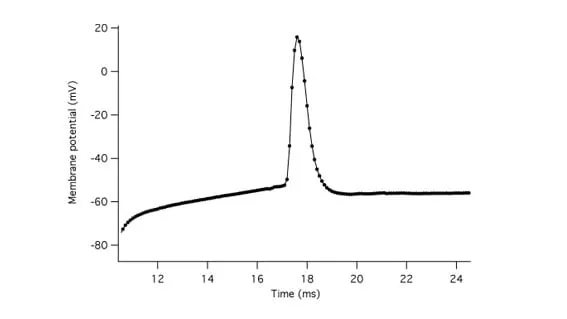
Patch-clamp positioning
Holding a patch pipette drift-free for the length of a recording.
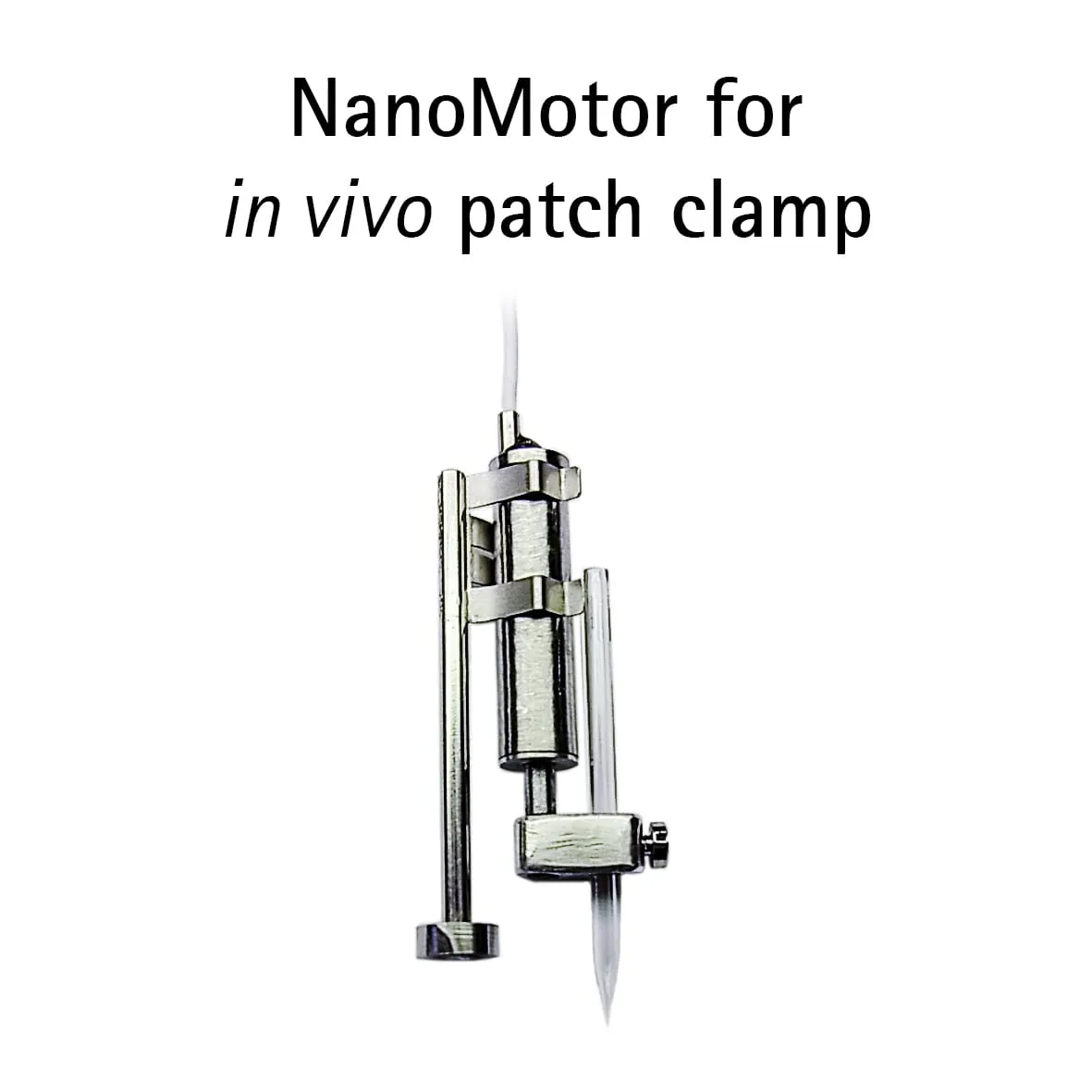
Patch clamp in freely moving animals
A head-mountable Nanomotor® that advances and anchors the pipette on a moving animal.
Impaling plant cells
Microelectrode impalement of walled cells such as stomatal guard cells.
Products used
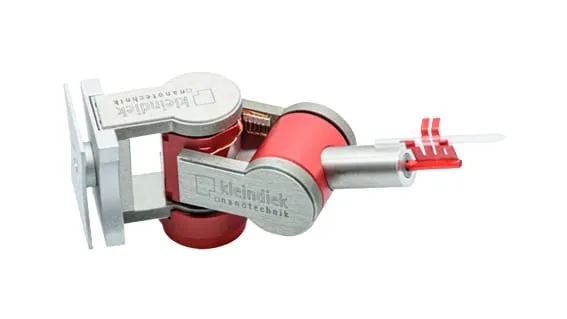
MM3A-LS
The MM3A micromanipulator configured for highly sensitive electrophysiology — long-term stability and sub-nanometre precision.
View product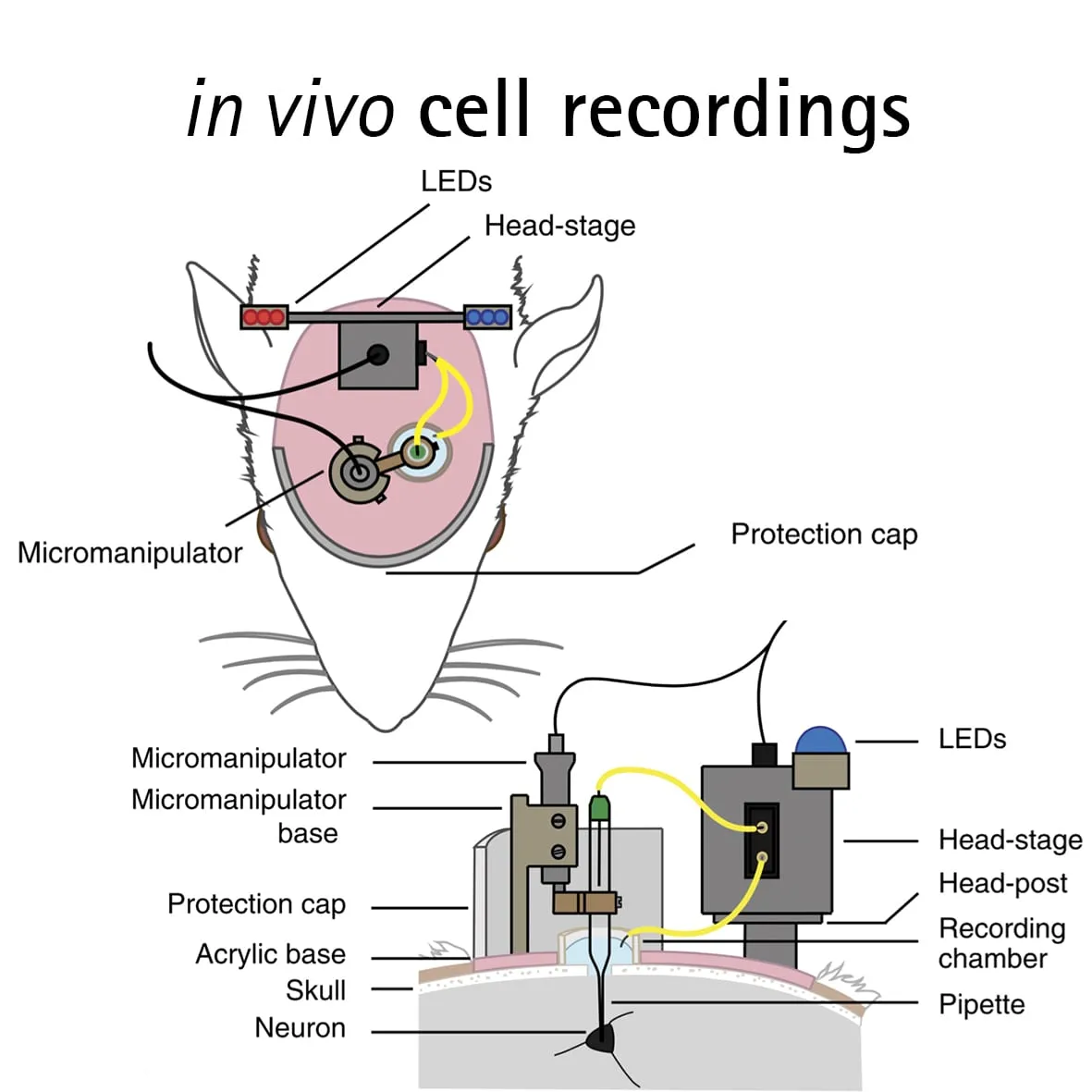
in vivo Nanomotor
A single-axis Nanomotor® light and rigid enough to ride on an animal's head — for patch-clamp recording in freely moving animals.
View productRelated publications
Talk to an application engineer
Tell us your sample and your microscope — we’ll walk you through the workflow and route you to the right regional team.